By Emily Herr
The Scoop Digital Newspaper: May 2025

Sugar Feather Farm specializes in a diverse range of fowl, with a strong commitment to preserving rare, endangered, and heritage breeds. Their dedication extends to ensuring the well-being and vitality of each animal through sustainable farming practices, customized non-GMO diets, and hands-on care. Here’s a brief overview:
- Chickens: Sugar Feather Farm likely offers a variety of chicken breeds, possibly including rare or heritage types. These breeds are often chosen for their unique characteristics, such as egg color, temperament, or hardiness.
- Ducks: Similar to chickens, the farm likely keeps different duck breeds, potentially focusing on those that are less common. Heritage duck breeds can offer unique qualities different from standard commercial breeds.
- Turkeys: Sugar Feather Farm’s turkeys are likely heritage breeds, which differ significantly from the broad-breasted white turkeys commonly found in supermarkets. Heritage turkeys are known for their flavor and ability to forage.
- Guinea Fowl: These birds are known for their unique appearance and their role in pest control. Sugar Feather Farm likely raises guinea fowl as part of their diverse collection of fowl.
- Geese: Geese are larger waterfowl known for their intelligence, strong personalities, and potential as guardians. Sugar Feather Farm might offer specific breeds known for their temperament, foraging abilities, or unique characteristics.
- Quail: Sugar Feather Farm includes quail in their selection, probably focusing on breeds known for their egg production or meat quality.
Key Focus: Rare and Heritage Breeds
A central theme at Sugar Feather Farm is the preservation of rare and heritage breeds. These breeds often possess unique genetic traits and are important for maintaining biodiversity within poultry.
Sustainable Farming Practices
Sugar Feather Farm emphasizes sustainable farming practices, which suggests a commitment to environmentally friendly and ethical animal husbandry. This approach ensures the health and vitality of their fowl.

A Comparative Look at Chickens, Ducks, Turkeys, Guinea Fowl, and Quail
Continuing our exploration of the diverse fowl potentially found at Sugar Feather Farm, let’s delve into the distinct characteristics that set chickens, ducks, turkeys, guinea fowl, and quail apart. Understanding these differences is key to appreciating the unique roles each bird plays and the specific care they require.
Chickens (Gallus gallus domesticus)
The most ubiquitous of domestic fowl, chickens are known for their adaptability and the wide variety of breeds that exist, each with unique traits in terms of size, egg production (ranging from various colors to frequency), temperament, and plumage.

Key Characteristics:
- Physical: Typically have a round body, smaller head, short beak and wings, and featherless legs. Many breeds possess fleshy combs and wattles. Size varies greatly depending on the breed.
- Habitat: Primarily terrestrial, though they can fly short distances. They prefer well-drained areas with access to dust for bathing.
- Diet: Omnivorous, consuming a mix of grains, seeds, insects, and vegetation.
- Social Behavior: Social animals that live in flocks with a defined pecking order. Roosters are known for their crowing.
- Reproduction: Hens lay a clutch of eggs and incubate them. Chicks are precocial, meaning they are relatively independent shortly after hatching.
Ducks (Various species within Anatidae family)
Ducks are waterfowl adapted for life in and around water. They exhibit a range of sizes and characteristics depending on the breed, with some being better suited for meat production, others for egg laying, and some as ornamental birds.

Key Characteristics:
- Physical: Characterized by a broad, flattened bill and webbed feet, which aid in swimming. They have waterproof feathers due to a waxy coating. Their legs are set further back on their body, giving them a characteristic waddling gait on land.
- Habitat: Primarily aquatic, thriving in ponds, lakes, and other bodies of water. They need access to water for swimming and cleaning.
- Diet: Omnivorous, feeding on aquatic plants, insects, seeds, and small invertebrates. Their bills have lamellae (small ridges) that help them filter food from water.
- Social Behavior: Can be social, often living in flocks. Drakes (males) may exhibit elaborate courtship displays.
- Reproduction: Hens lay eggs in nests built on the ground near water. Ducklings are precocial and can swim shortly after hatching.
Turkeys (Meleagris gallopavo)
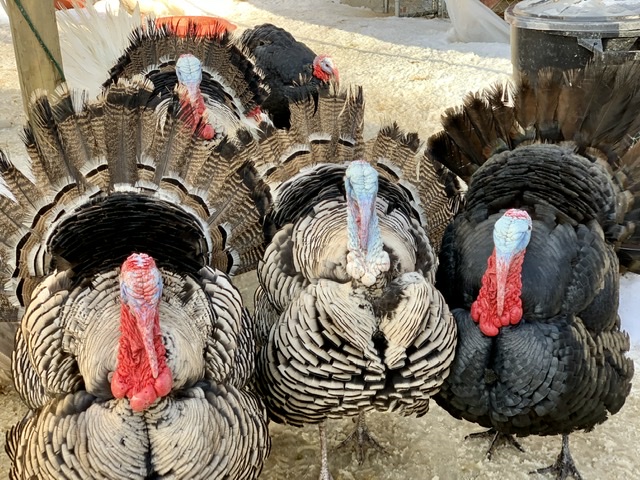
Turkeys are large, ground-dwelling birds native to North America. Domestic turkeys are significantly larger and heavier than their wild counterparts and are primarily raised for meat. Heritage breeds, like those likely found at Sugar Feather Farm, retain more of the characteristics of wild turkeys.
Key Characteristics:
- Physical: Large birds with long legs, a wide, rounded tail, and a small head on a long neck. Males (toms or gobblers) are larger and have a fleshy wattle under their chin and a “beard” of feathers on their chest. They can also puff up their feathers and fan their tails during courtship.
- Habitat: Prefer woodlands and forests with open clearings. They roost in trees at night.
- Diet: Omnivorous, feeding on nuts, berries, seeds, insects, and occasionally small reptiles. They forage on the ground.
- Social Behavior: Can live in flocks. Males engage in elaborate courtship displays, including gobbling.
- Reproduction: Hens lay a clutch of eggs in a ground nest. Poults (young turkeys) are relatively precocial.
Guinea Fowl (Numida meleagris and other species)
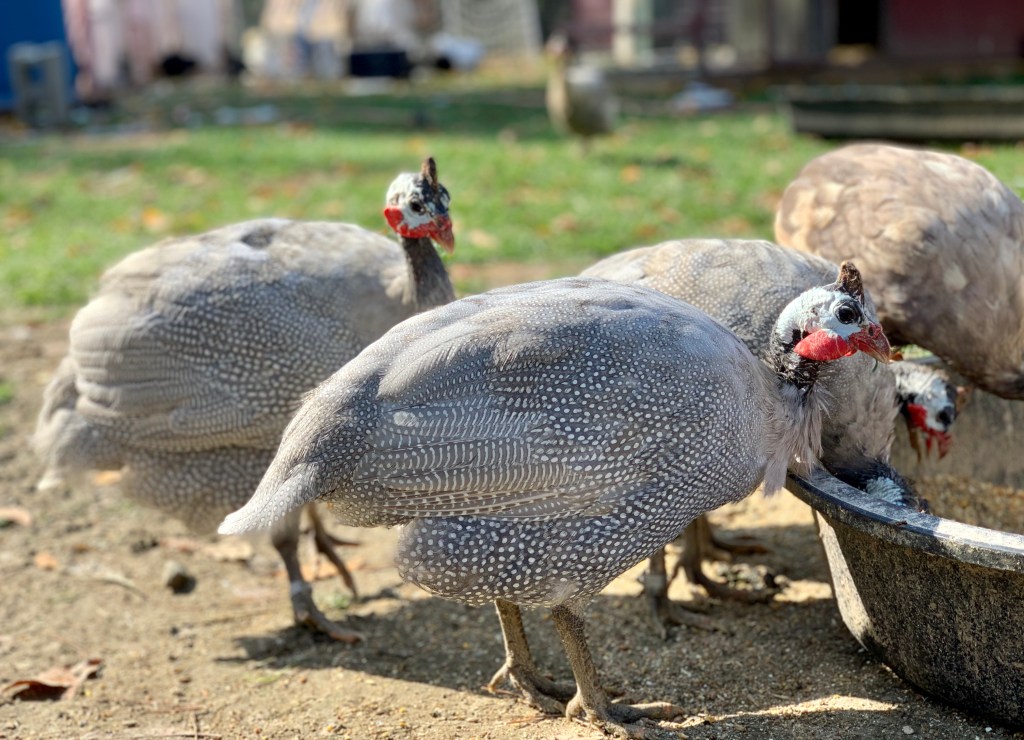
Guinea fowl are African birds known for their distinctive appearance (often with spotted plumage and bare heads) and their loud, often startling calls. They are sometimes kept for pest control and as “watchdogs” due to their vocal nature.
Key Characteristics:
- Physical: Medium-sized birds with a stocky body, short wings, and often a bare head and neck, which can be brightly colored and may have wattles or crests. Their plumage is typically dark with white spots.
- Habitat: Native to Africa, they inhabit grasslands, savannas, and woodlands. They are terrestrial but can fly strongly for short distances and roost in trees.
- Diet: Omnivorous, feeding on seeds, insects, tubers, and small reptiles. They are excellent foragers.
- Social Behavior: Highly social birds that live in flocks. They are known for their loud, harsh calls.
- Reproduction: Hens lay a clutch of eggs in a hidden nest on the ground. Keets (young guinea fowl) are somewhat precocial.
Geese (Various species within Anserinae subfamily) Geese are larger waterfowl, closely related to ducks, but generally larger and with longer necks. They are known for their intelligence, strong flock bonds, and often vocal nature. Different breeds of geese can vary significantly in size, temperament, and purpose (meat, eggs, guarding).

Key Characteristics:
- Physical: Larger than ducks with a longer neck and a stout body. Their bills are typically larger and more triangular than ducks’. They have webbed feet for swimming. Plumage varies by breed, often including shades of white, gray, and brown.
- Habitat: Primarily associated with water, such as ponds, lakes, and marshes, but they also graze extensively on land. They need access to water for drinking and cleaning.
- Diet: Primarily herbivorous, feeding on grasses, weeds, and other vegetation. They are excellent grazers.
- Social Behavior: Highly social animals that form strong family bonds and live in flocks. They are known for their honking calls and can be quite vocal. Some breeds are known for their protective instincts and can act as effective guardians.
- Reproduction: Geese typically mate for life. Hens lay a clutch of large eggs in a nest on the ground. Goslings are precocial and can swim and forage shortly after hatching, often under the close supervision of both parents.
Quail (Various genera within Phasianidae and Odontophoridae families)
Quail are small, ground-dwelling birds often found in coveys (small groups). They are known for their rapid movements and are raised for their meat and eggs.

Key Characteristics:
- Physical: Small, plump birds with short legs and wings. Their plumage is typically cryptic, providing excellent camouflage.
- Habitat: Inhabit grasslands, brushy areas, and open woodlands. They spend most of their time on the ground, seeking cover.
- Diet: Primarily granivorous, feeding on seeds and grains, but they also eat insects and berries.
- Social Behavior: Social birds that live in small groups called coveys. They have distinctive calls for communication.
- Reproduction: Hens lay a clutch of eggs in a ground nest. Chicks are highly precocial and can move and forage shortly after hatching.
Conclusion
The array of fowl – chickens, ducks, turkeys, guinea fowl, and quail – each brings unique characteristics to a farm like Sugar Feather Farm. From the egg-laying prowess and diverse breeds of chickens to the aquatic adaptations of ducks, the majestic size of turkeys, the vigilant nature of guinea fowl, and the petite charm of quail, each species contributes to the biodiversity and potential offerings of the farm. Sugar Feather Farm’s focus on rare and heritage breeds likely highlights the unique qualities and conservation importance of these often-overlooked varieties within each category of fowl.

The author would like to thank Sugar Feather Farm for providing the inspiration for this article.
Check out Sugar Feather Farm for all your fowl needs.
~~~~~~~~~~~~~~~~~~~~~~~~~~~~~~~~~~~~~~~~~~~~~
The Scoop Digital Newspaper
contact@thescoopdigitalnewspaper.blog
 Emily Herr
Leave a comment